Smyrna Ancient City
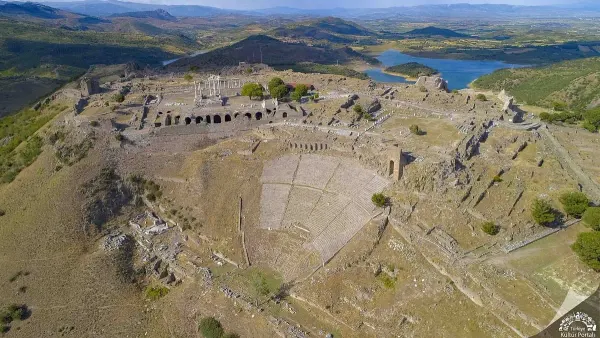
Located beneath and around modern-day Izmir, Smyrna Ancient City was one of the most important Greek and Roman cities of the Aegean world. Known today as ancient Smyrna, the city played a major role in trade, politics, culture, and early Christianity for thousands of years.
With its strategic harbor, fertile surroundings, and connection to major trade routes, Smyrna became one of the most influential cities of western Anatolia throughout antiquity.
Today, visitors can explore the Agora of Smyrna and archaeological remains scattered across Izmir, revealing layers of Greek, Roman, Byzantine, and Ottoman history hidden beneath the modern city.
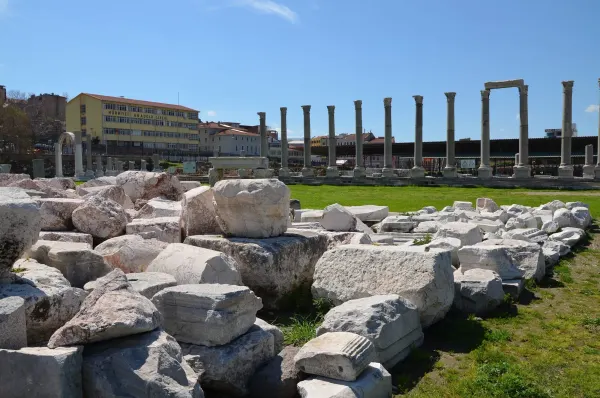
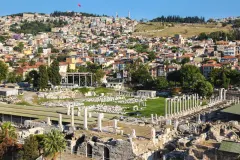
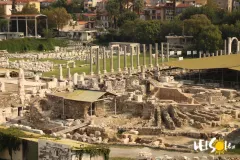
Photo Gallery
History
The History of Smyrna Ancient City
The earliest settlement connected to Smyrna dates back thousands of years to the Bronze Age. Archaeological discoveries in the Bayrakli area, often called Old Smyrna, indicate early Aeolian and later Ionian Greek settlement.
According to ancient traditions, the city was later reorganized during the Hellenistic period after Alexander the Great is believed to have envisioned a new Smyrna on the slopes of Mount Pagos, known today as Kadifekale.
The new city developed around the area of modern Izmir’s historical center and rapidly grew into one of the most important port cities of the eastern Mediterranean.
Smyrna flourished especially during:
-the Hellenistic period
-Roman rule
-the Byzantine Empire
-early Christianity
The city became famous for:
-its large harbor
-cosmopolitan population
-trade networks
-temples and public buildings
-cultural life
-strong connection to the Roman world
Smyrna is also one of the Seven Churches of Revelation mentioned in the New Testament, making it an important destination in biblical history.
Throughout its long history, earthquakes, fires, wars, and urban rebuilding continuously reshaped the city.
What to See in Smyrna Ancient City
Agora of Smyrna
The Agora of Smyrna is the most important surviving archaeological site of ancient Smyrna. Built during the Roman period after a devastating earthquake in the 2nd century AD, the agora contains arches, columns, courtyards, inscriptions, and underground vaulted chambers.
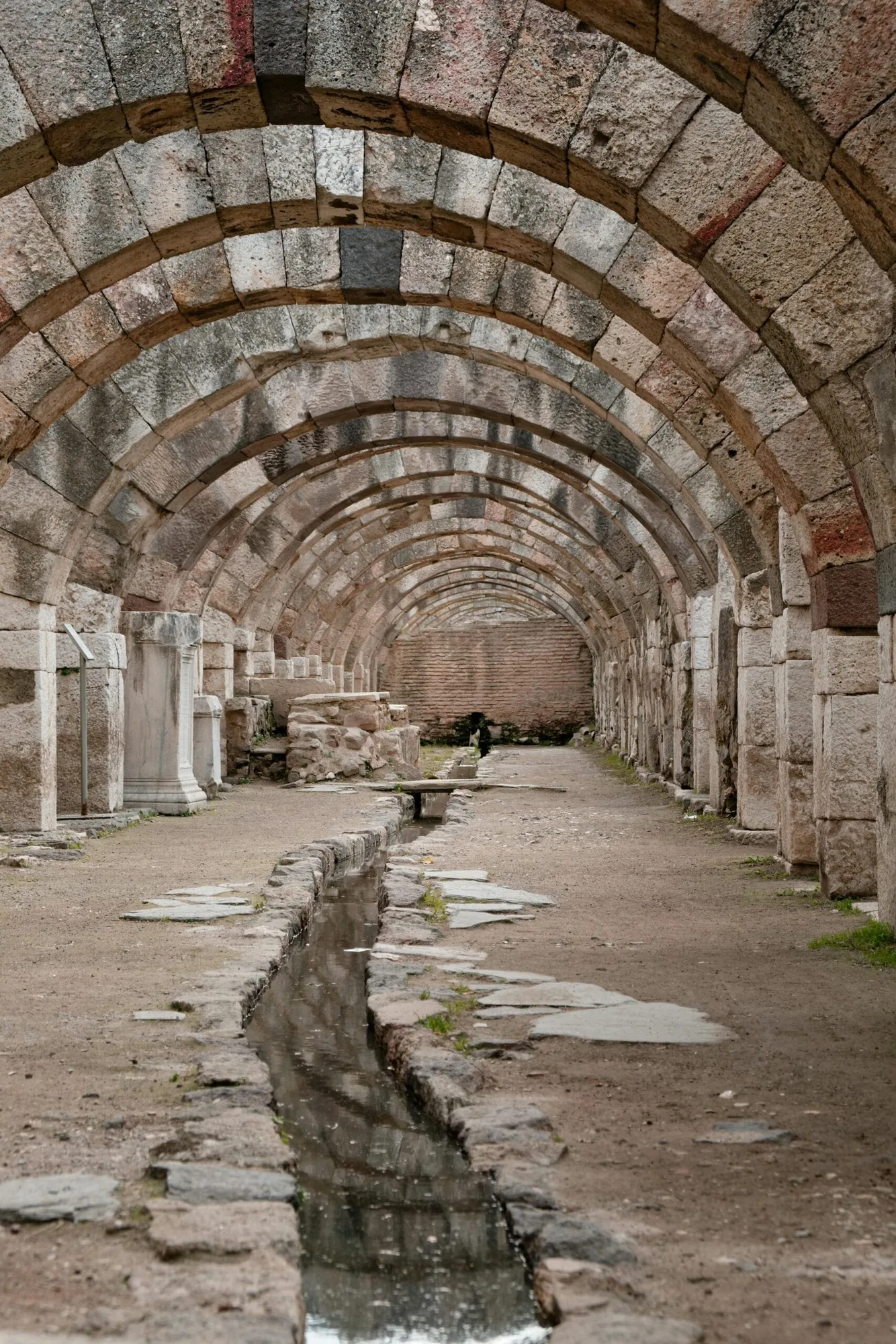 The Agora of Smyrna preserves impressive Roman arches and vaulted corridors in the heart of modern Izmir.
Kadifekale (Mount Pagos)
Kadifekale, meaning “Velvet Castle,” stands on the hill associated with the Hellenistic refoundation of Smyrna. The site offers panoramic views over modern Izmir and the Gulf of Izmir.
Roman and Byzantine Remains
Scattered remains of Roman roads, water systems, walls, and architectural fragments can still be found throughout the historical districts of Izmir.
Connection to Early Christianity
Smyrna holds an important place in Christian history as one of the Seven Churches of Revelation and as the city associated with Saint Polycarp, one of the early Christian bishops and martyrs.
Why Visit Smyrna Ancient City
Unlike isolated archaeological sites, Smyrna offers a unique experience where ancient history exists directly within a modern living city.
Visitors can experience:
-ancient Greek history
-Roman urban culture
-biblical heritage
-Ottoman Izmir
-modern Aegean life
All within the same destination.
Smyrna is especially recommended for travelers interested in:
-archaeology
-biblical history
-ancient trade cities
-urban history
-Roman architecture
-early Christianity
-Izmir history
The Agora of Smyrna preserves impressive Roman arches and vaulted corridors in the heart of modern Izmir.
Kadifekale (Mount Pagos)
Kadifekale, meaning “Velvet Castle,” stands on the hill associated with the Hellenistic refoundation of Smyrna. The site offers panoramic views over modern Izmir and the Gulf of Izmir.
Roman and Byzantine Remains
Scattered remains of Roman roads, water systems, walls, and architectural fragments can still be found throughout the historical districts of Izmir.
Connection to Early Christianity
Smyrna holds an important place in Christian history as one of the Seven Churches of Revelation and as the city associated with Saint Polycarp, one of the early Christian bishops and martyrs.
Why Visit Smyrna Ancient City
Unlike isolated archaeological sites, Smyrna offers a unique experience where ancient history exists directly within a modern living city.
Visitors can experience:
-ancient Greek history
-Roman urban culture
-biblical heritage
-Ottoman Izmir
-modern Aegean life
All within the same destination.
Smyrna is especially recommended for travelers interested in:
-archaeology
-biblical history
-ancient trade cities
-urban history
-Roman architecture
-early Christianity
-Izmir history
The Agora of Smyrna preserves impressive Roman arches and vaulted corridors in the heart of modern Izmir.
Kadifekale (Mount Pagos)
Kadifekale, meaning “Velvet Castle,” stands on the hill associated with the Hellenistic refoundation of Smyrna. The site offers panoramic views over modern Izmir and the Gulf of Izmir.
Roman and Byzantine Remains
Scattered remains of Roman roads, water systems, walls, and architectural fragments can still be found throughout the historical districts of Izmir.
Connection to Early Christianity
Smyrna holds an important place in Christian history as one of the Seven Churches of Revelation and as the city associated with Saint Polycarp, one of the early Christian bishops and martyrs.
Why Visit Smyrna Ancient City
Unlike isolated archaeological sites, Smyrna offers a unique experience where ancient history exists directly within a modern living city.
Visitors can experience:
-ancient Greek history
-Roman urban culture
-biblical heritage
-Ottoman Izmir
-modern Aegean life
All within the same destination.
Smyrna is especially recommended for travelers interested in:
-archaeology
-biblical history
-ancient trade cities
-urban history
-Roman architecture
-early Christianity
-Izmir historyVisitor Information
The Agora of Smyrna is located in the center of modern Izmir and can easily be reached by tram, metro, taxi, or walking from nearby districts.
Museum Pass Turkey is generally accepted, and opening hours may vary seasonally.
Because the archaeological site is located inside the city center, Smyrna can easily be combined with:
Kadifekale
Kemeralti Bazaar
Konak Square
Izmir Clock Tower
the Kordon waterfront
Ephesus Ancient City
during the same day itinerary.