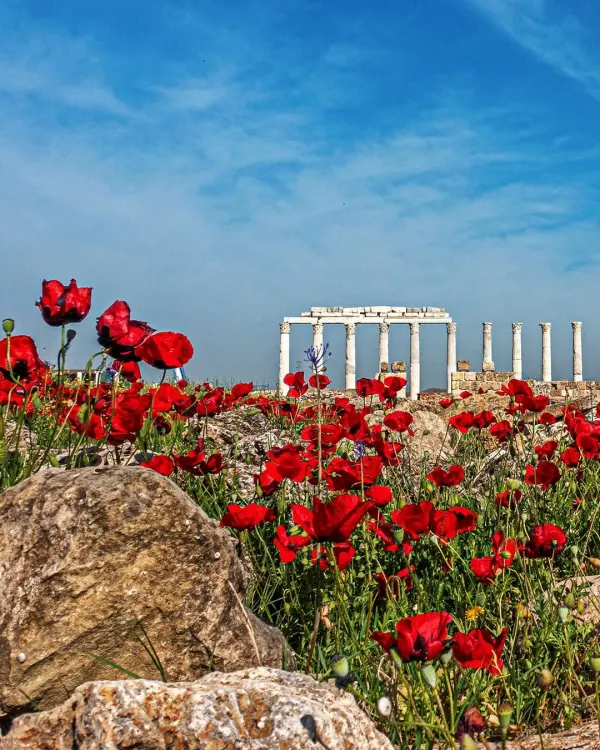
Pamukkale Travertines & Hierapolis Ancient City
Located beside the famous white travertines of Pamukkale in southwestern Turkey, Hierapolis Ancient City was one of the most important Greco-Roman spa and religious centers of antiquity. Built above thermal springs believed to have healing properties, the city attracted pilgrims, traders, nobles, and travelers from across the ancient world.
Today, Hierapolis stands as a UNESCO World Heritage Site together with Pamukkale and remains one of the most visited archaeological destinations in Turkey.
With its remarkably preserved theater, necropolis, Roman baths, temples, streets, and sacred pools, Hierapolis offers visitors a unique combination of natural beauty and ancient history.
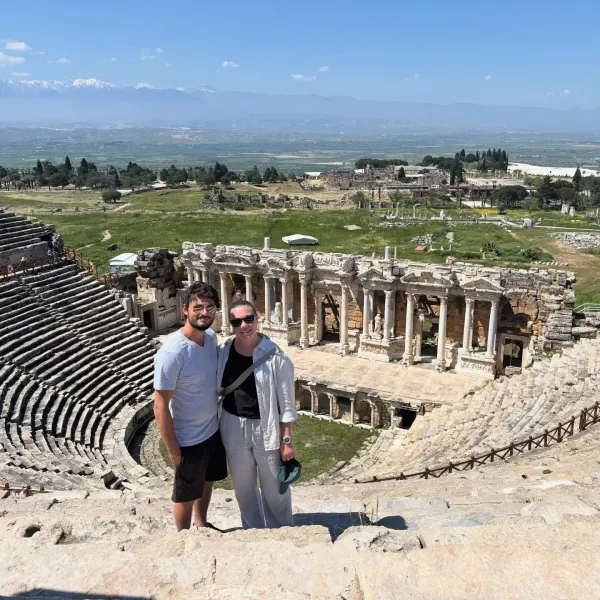
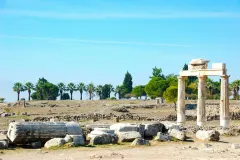
Photo Gallery
History
The History of Hierapolis Ancient City
Hierapolis was founded during the Hellenistic period, most likely in the 2nd century BC by the Attalid kings of Pergamon. The city later came under Roman control and rapidly developed into an important thermal spa center thanks to its natural hot springs.
The name “Hierapolis” is often translated as “Sacred City,” reflecting the religious importance of the settlement throughout antiquity.
During the Roman period, Hierapolis became famous for:
-thermal healing waters
-religious sanctuaries
-monumental architecture
-large necropolis areas
-cultural and commercial activity
Because many people traveled to Hierapolis seeking healing from illness and chronic conditions, the city eventually developed one of the largest ancient cemeteries in Anatolia.
Hierapolis also became an important center of early Christianity. According to Christian tradition, Saint Philip the Apostle was martyred here during the 1st century AD. Later Byzantine structures and churches further strengthened the city’s Christian significance.
Several earthquakes damaged Hierapolis throughout history, including major destructions during the Roman and Byzantine periods. Despite this, large sections of the city survived and can still be explored today.
What to See in Hierapolis Ancient City
The Ancient Theatre
The theatre of Hierapolis is one of the best-preserved Roman theaters in Turkey. Built into the hillside, it contains beautifully preserved stage decorations, reliefs, and seating sections overlooking the landscape below.
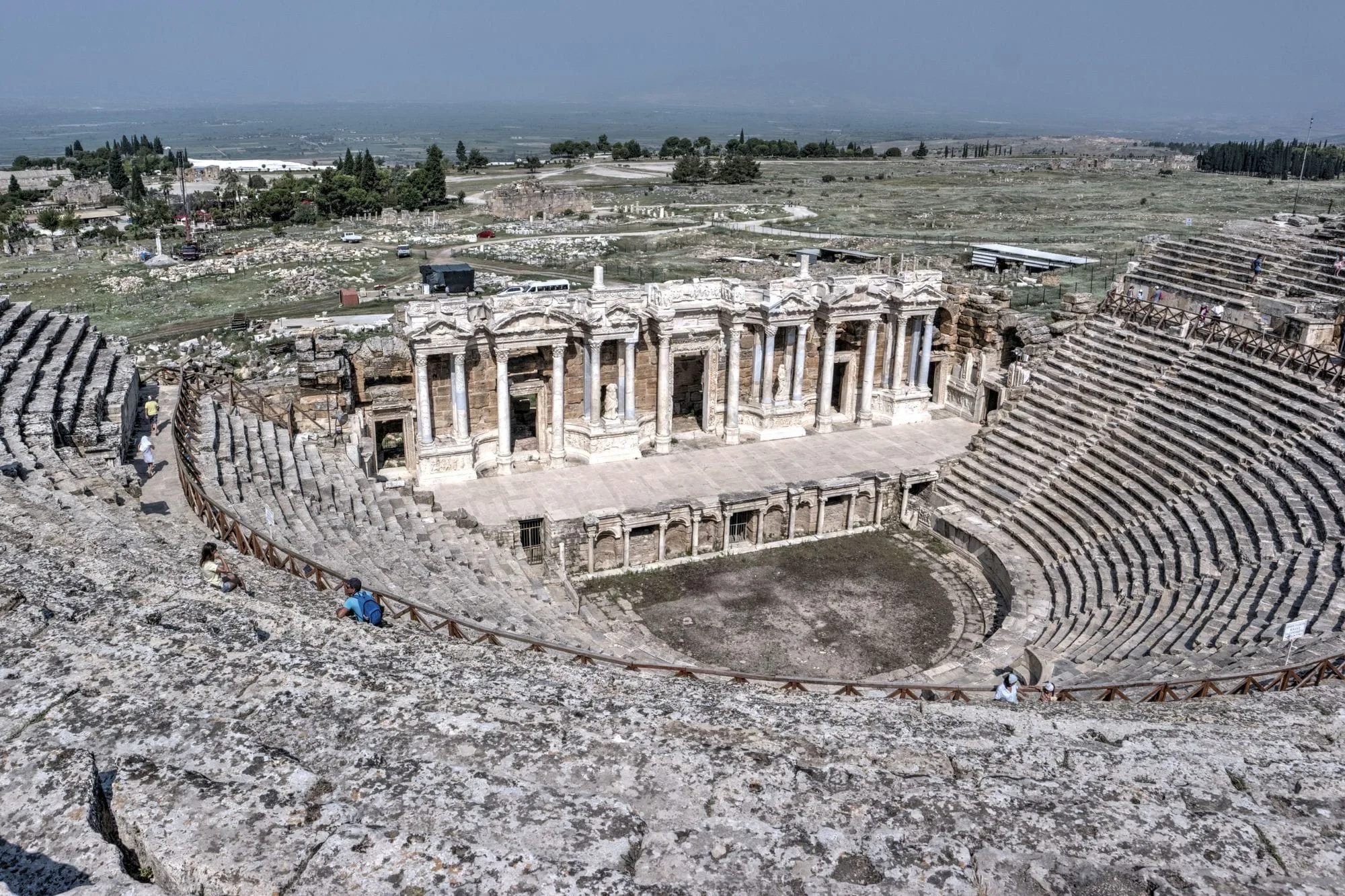 The Ancient Theatre of Hierapolis is one of the best-preserved Roman theatres in Turkey.
The Necropolis
Hierapolis contains one of the largest ancient necropolises in Anatolia, stretching for several kilometers outside the city walls. Tombs, sarcophagi, and burial monuments reflect centuries of funerary traditions.
The Ancient Theatre of Hierapolis is one of the best-preserved Roman theatres in Turkey.
The Necropolis
Hierapolis contains one of the largest ancient necropolises in Anatolia, stretching for several kilometers outside the city walls. Tombs, sarcophagi, and burial monuments reflect centuries of funerary traditions.
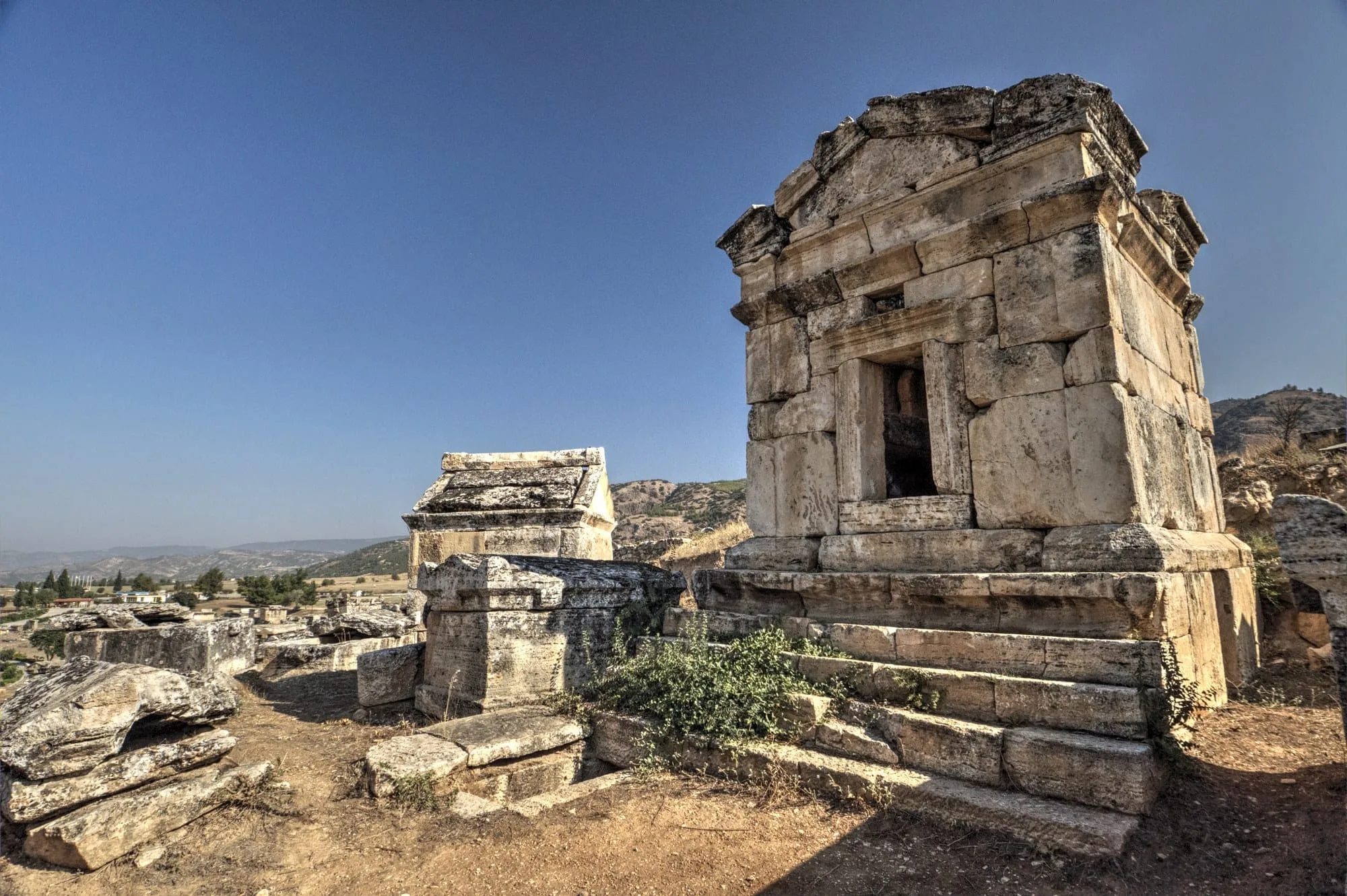 The Northern Necropolis of Hierapolis contains hundreds of ancient tombs and burial monuments from the Roman period.
Roman Baths and Museum
The former Roman bath complex now serves as the Hierapolis Archaeology Museum, displaying statues, sarcophagi, inscriptions, and artifacts discovered throughout the region.
The Northern Necropolis of Hierapolis contains hundreds of ancient tombs and burial monuments from the Roman period.
Roman Baths and Museum
The former Roman bath complex now serves as the Hierapolis Archaeology Museum, displaying statues, sarcophagi, inscriptions, and artifacts discovered throughout the region.
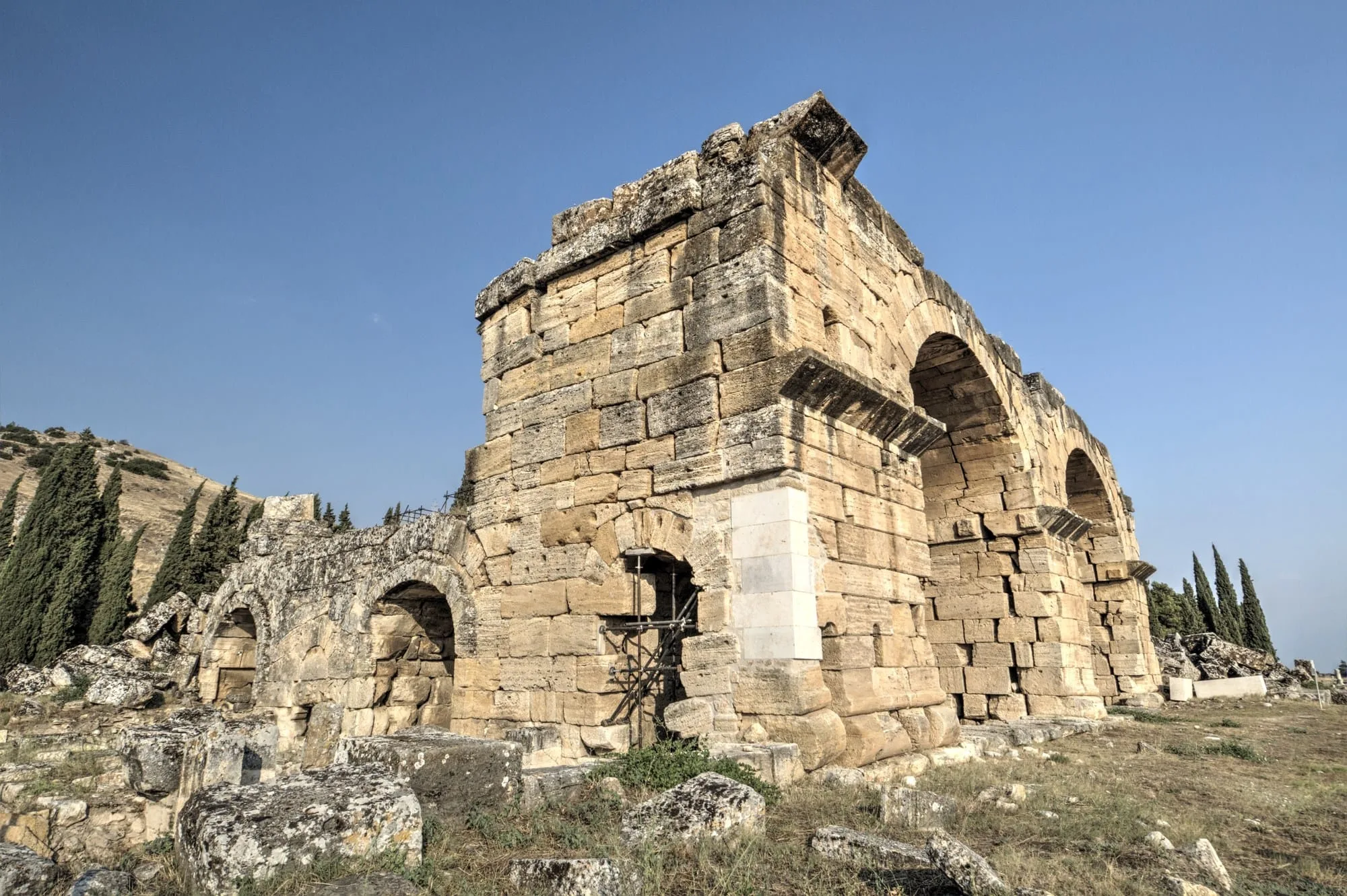 The Roman Baths of Hierapolis reflect the importance of thermal culture and healing traditions in the ancient city.
Frontinus Street and City Gates
Visitors can walk along the ancient colonnaded streets and pass through monumental Roman gates that once marked the entrances to the sacred city.
The Roman Baths of Hierapolis reflect the importance of thermal culture and healing traditions in the ancient city.
Frontinus Street and City Gates
Visitors can walk along the ancient colonnaded streets and pass through monumental Roman gates that once marked the entrances to the sacred city.
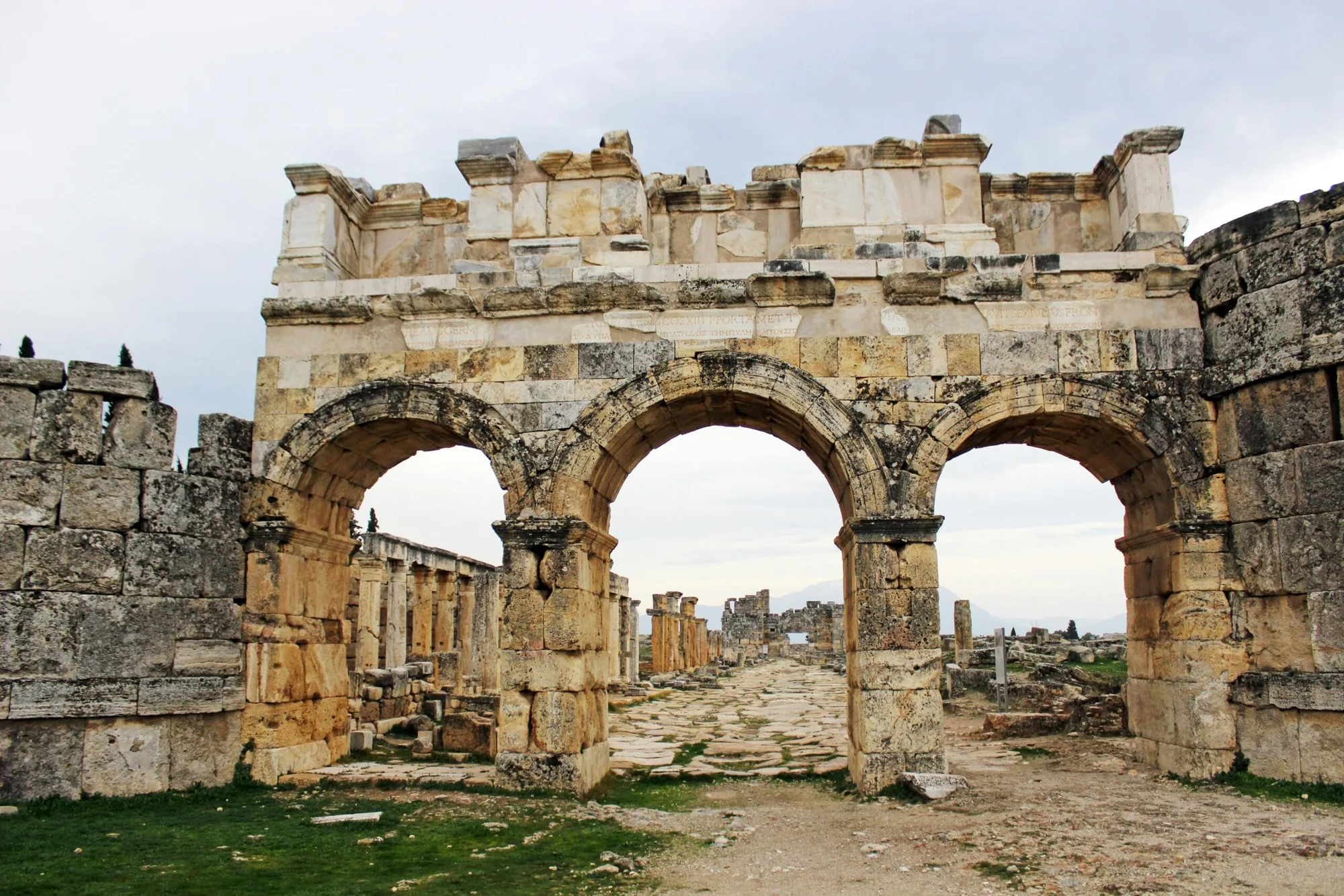 The Domitian Gate was one of the monumental entrances to Hierapolis Ancient City during the Roman period.
Cleopatra Antique Pool
One of the most famous attractions in Hierapolis is the Antique Pool, often called Cleopatra’s Pool. Visitors can swim among submerged Roman columns in naturally warm mineral water.
The Domitian Gate was one of the monumental entrances to Hierapolis Ancient City during the Roman period.
Cleopatra Antique Pool
One of the most famous attractions in Hierapolis is the Antique Pool, often called Cleopatra’s Pool. Visitors can swim among submerged Roman columns in naturally warm mineral water.
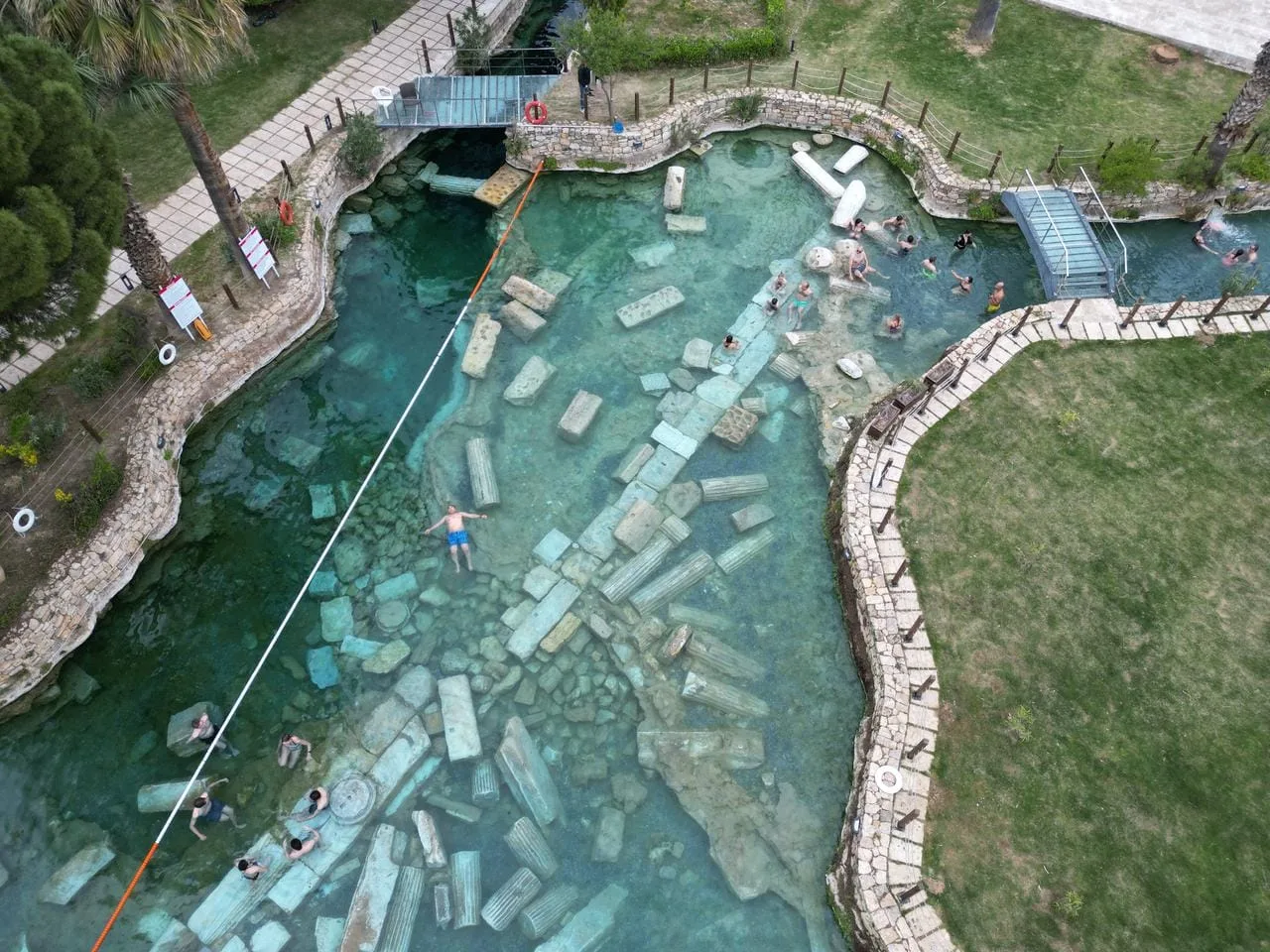 The famous Cleopatra Antique Pool in Hierapolis allows visitors to swim among ancient Roman columns in thermal mineral water.
Martyrium of Saint Philip
Located on the hills above the city, the Martyrium of Saint Philip is an important early Christian pilgrimage site connected to Saint Philip the Apostle.
The famous Cleopatra Antique Pool in Hierapolis allows visitors to swim among ancient Roman columns in thermal mineral water.
Martyrium of Saint Philip
Located on the hills above the city, the Martyrium of Saint Philip is an important early Christian pilgrimage site connected to Saint Philip the Apostle.
 The Martyrium of Saint Philip is one of the most important early Christian pilgrimage sites in the ancient city of Hierapolis.
Why Visit Hierapolis Ancient City
Hierapolis offers visitors a rare opportunity to experience both natural and archaeological wonders in a single location.
Unlike many ancient cities focused only on politics or trade, Hierapolis developed around healing, spirituality, and thermal culture. The city’s connection with Pamukkale creates one of the most unique historical landscapes in the world.
The site is especially recommended for travelers interested in:
-Roman history
-ancient healing traditions
-archaeology
-UNESCO heritage sites
-thermal springs
-early Christianity
-photography
The Martyrium of Saint Philip is one of the most important early Christian pilgrimage sites in the ancient city of Hierapolis.
Why Visit Hierapolis Ancient City
Hierapolis offers visitors a rare opportunity to experience both natural and archaeological wonders in a single location.
Unlike many ancient cities focused only on politics or trade, Hierapolis developed around healing, spirituality, and thermal culture. The city’s connection with Pamukkale creates one of the most unique historical landscapes in the world.
The site is especially recommended for travelers interested in:
-Roman history
-ancient healing traditions
-archaeology
-UNESCO heritage sites
-thermal springs
-early Christianity
-photography
The Ancient Theatre of Hierapolis is one of the best-preserved Roman theatres in Turkey.
The Necropolis
Hierapolis contains one of the largest ancient necropolises in Anatolia, stretching for several kilometers outside the city walls. Tombs, sarcophagi, and burial monuments reflect centuries of funerary traditions.
The Northern Necropolis of Hierapolis contains hundreds of ancient tombs and burial monuments from the Roman period.
Roman Baths and Museum
The former Roman bath complex now serves as the Hierapolis Archaeology Museum, displaying statues, sarcophagi, inscriptions, and artifacts discovered throughout the region.
The Roman Baths of Hierapolis reflect the importance of thermal culture and healing traditions in the ancient city.
Frontinus Street and City Gates
Visitors can walk along the ancient colonnaded streets and pass through monumental Roman gates that once marked the entrances to the sacred city.
The Domitian Gate was one of the monumental entrances to Hierapolis Ancient City during the Roman period.
Cleopatra Antique Pool
One of the most famous attractions in Hierapolis is the Antique Pool, often called Cleopatra’s Pool. Visitors can swim among submerged Roman columns in naturally warm mineral water.
The famous Cleopatra Antique Pool in Hierapolis allows visitors to swim among ancient Roman columns in thermal mineral water.
Martyrium of Saint Philip
Located on the hills above the city, the Martyrium of Saint Philip is an important early Christian pilgrimage site connected to Saint Philip the Apostle.
The Martyrium of Saint Philip is one of the most important early Christian pilgrimage sites in the ancient city of Hierapolis.
Why Visit Hierapolis Ancient City
Hierapolis offers visitors a rare opportunity to experience both natural and archaeological wonders in a single location.
Unlike many ancient cities focused only on politics or trade, Hierapolis developed around healing, spirituality, and thermal culture. The city’s connection with Pamukkale creates one of the most unique historical landscapes in the world.
The site is especially recommended for travelers interested in:
-Roman history
-ancient healing traditions
-archaeology
-UNESCO heritage sites
-thermal springs
-early Christianity
-photographyVisitor Information
Hierapolis Ancient City is located in Pamukkale near Denizli in southwestern Turkey.
The archaeological site can easily be visited together with Pamukkale Travertines during the same trip. Museum Pass Turkey is generally accepted, and opening hours may vary seasonally.
Because the area involves long walking distances and exposure to sun during summer months, comfortable shoes, water, and sun protection are strongly recommended.
Spring and autumn are considered the best seasons to visit thanks to the milder temperatures.